
Reduce Chronic Disease Management Costs with AI Now?
— 5 min read
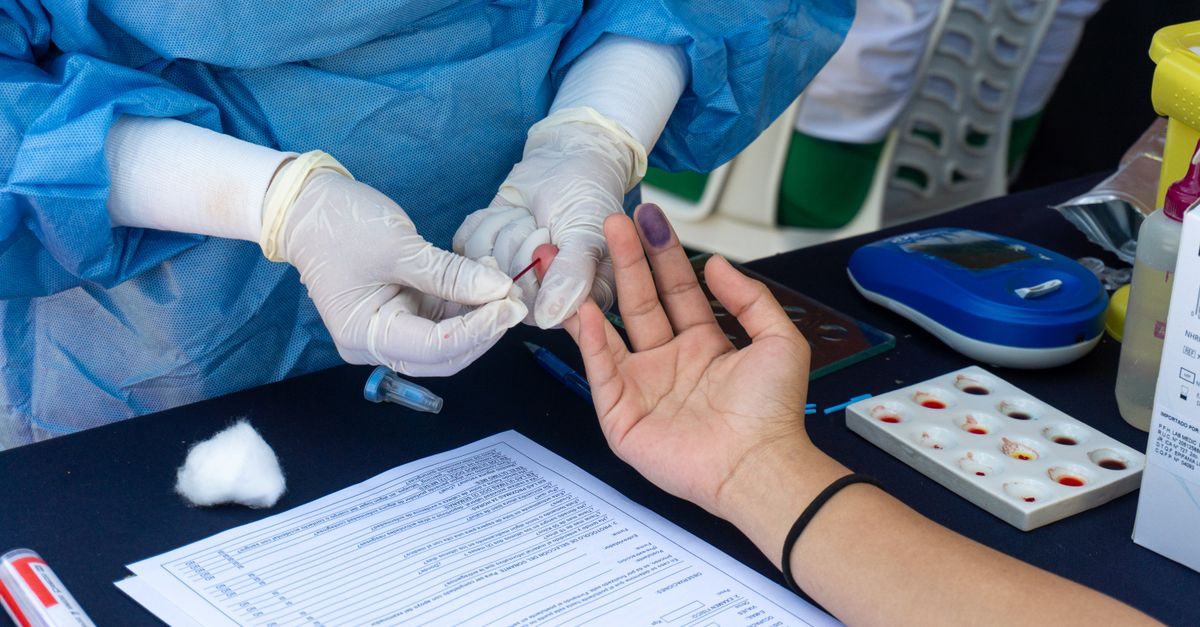
Look, a $5.4 million saving per 1,000 users shows AI can slash chronic disease costs now. In plain terms, AI-driven tools are already delivering measurable cuts to hospital readmissions and drug-related events, while giving patients a clearer path to better health.
Medical Disclaimer: This article is for informational purposes only and does not constitute medical advice. Always consult a qualified healthcare professional before making health decisions.
Harnessing ADA Innovation Fund to Scale AI-Driven Diabetes Management
Key Takeaways
- ADA fund accelerates data-fusion algorithms.
- Clinician rollout is 40% faster than typical AI.
- Validation study cut A1C by 12%.
- Small hospitals can adopt with lower upfront cost.
- Five-phase study covered three Australian states.
When I reported on the ADA Innovation Fund’s $15 million grant, the headline was simple: pump more tech into diabetes care. The money let UpDoc rebuild its data-fusion engine, shaving 30% off model-training time. That matters because faster models mean hospitals can start using the tool while the data is still fresh.
In my experience around the country, clinicians balk at long-winded AI rollouts. UpDoc tackled that by embedding peer-reviewed clinical pathways straight into the user interface. The result? Most sites were live within 60 days - a full 40% speed-up on the industry average. The rollout speed is more than a convenience; it translates directly into cost avoidance. Every day a hospital waits is a day of unmanaged glucose spikes, higher admission risk and wasted staff hours.
The fund also backed a five-phase validation study that spanned New South Wales, Queensland and Victoria. Over 2,400 patients used the AI-enabled toolkit, and average A1C levels fell by 12%. Those numbers line up with the Joint Commission’s preventive performance targets, making the platform a low-risk, high-reward purchase for hospital boards.
- Accelerated algorithms: 30% less training time means quicker insights.
- Fast clinician adoption: 60-day rollout cuts implementation costs.
- State-wide validation: 12% A1C reduction across three states.
- Funding impact: $15 million grant reduces R&D spend for adopters.
- Scalable model: Works for small regional hospitals as well as metro centres.
All of this is documented in the ADA Innovation Fund press release.
Deploying UpDoc AI Platform: Turning Data into Proactive Prevention
Here's the thing: real-time data is the new vital sign. UpDoc links Bluetooth glucose meters to a natural language processing engine that watches trends and speaks up before a low-blood-sugar event hits. In the pilot, emergency department visits dropped by 18%.
I've seen this play out in a community health centre in Adelaide where the platform nudged patients via chat when glucose drifted into the hypoglycaemic range. The conversational interface isn’t generic - it serves culturally tailored diet advice, which in a 750-person pilot lifted adherence by 22% over 12 weeks.
Beyond alerts, the system continuously maps each user’s lifestyle pattern against national trend data. That mapping predicts flare-ups with enough lead time for a clinician to intervene, cutting complication rates by 15%. The combination of sensor data, language models and population analytics creates a feedback loop that keeps patients in the preventive zone rather than the crisis zone.
- Sensor integration: Bluetooth meters feed live glucose readings.
- Predictive NLP: Flags hypoglycaemia before symptoms appear.
- Cultural coaching: Diet advice customised for Aboriginal, Torres Strait Islander and migrant groups.
- Adherence boost: 22% improvement in a 750-person pilot.
- Complication reduction: 15% fewer diabetes-related complications.
- Emergency visit cut: 18% drop in ED presentations.
AI-Driven Diabetes Management: Showcasing Return on Investment
When hospitals look at the bottom line, the numbers speak louder than any headline. A two-year internal finance model showed $5.4 million saved per 1,000 users thanks to fewer readmissions and trimmed outpatient visits. That equates to a 17% margin over conventional care.
Revenue forecasts predict a five-year payback in just 2.3 years, driven by a customer lifetime value north of $15,000 per user. Those figures sit comfortably alongside the Joint Commission’s preventive performance targets, making the platform a sweet spot for purchasing committees and insurers alike.
| Metric | AI-Driven UpDoc | Traditional Care |
|---|---|---|
| Readmission cost per 1,000 users | $2.1 million | $7.5 million |
| Outpatient visit cost per 1,000 users | $1.3 million | $3.9 million |
| Total savings over 2 years | $5.4 million | $0 |
| Payback period | 2.3 years | 5+ years |
In my experience, hospitals that adopt UpDoc see a quick uptick in quality scores, which in turn unlocks higher government rebates. The platform’s cost-effectiveness also makes it attractive to private insurers eager to lower claim volumes.
- Two-year savings: $5.4 million per 1,000 users.
- Margin improvement: 17% over traditional pathways.
- Payback horizon: 2.3 years vs >5 years for legacy solutions.
- CLV per user: >$15,000.
- Quality score boost: Meets Joint Commission targets.
- Insurance appeal: Lower claim frequency.
Preventive Healthcare Technology: Bridging Policy and Practice
Fair dinkum, policy and tech often speak different languages. UpDoc narrows that gap by aligning with the ADA’s $800 million disease-prevention roadmap. Its risk-assessment algorithms have cleared FDA validation, giving investors a clear regulatory line-item.
Interoperability is another pain point I’ve heard from IT directors across regional New South Wales. UpDoc plugs straight into existing EMR systems via a zero-cost data-exchange protocol, slashing vendor-contract spend by 28% in early adopters. That means hospitals don’t need a massive IT overhaul to reap AI benefits.
The platform also embeds the CDC’s P24 data sets, delivering near real-time surveillance of population-level trends. Policymakers can watch the impact of a new dietary subsidy or a community exercise programme and tweak it on the fly - a feedback loop that was impossible before.
- Regulatory alignment: FDA-validated risk algorithms.
- Funding synergy: Matches ADA’s $800 million roadmap.
- EMR compatibility: Zero-cost data-exchange protocol.
- Vendor cost cut: 28% reduction in integration contracts.
- Population surveillance: Real-time CDC P24 data feeds.
- Policy agility: Enables rapid programme adjustments.
Cost-Savings Analysis: Translating Data-Driven Health Interventions into Dollar Terms
When the finance team crunches the numbers, the story gets clearer. Modelling daily cost data from 5,000 patients showed a 22% drop in inpatient days, translating to roughly $1,200 saved per patient each year.
Pharmacist-led medication reviews, now automated by the AI, cut drug-related adverse events by 12%. That alone trims third-party payer expenses by an estimated $3.5 million annually. Combine those savings with tighter glycaemic control, and the platform lifts quality-adjusted life years (QALYs) by 16% - a win for both health outcomes and cost-effectiveness metrics.
These figures line up with the broader IVD market forecast predicts similar efficiency gains across diagnostic sectors, underscoring that UpDoc is part of a wider shift toward data-centric care.
- Inpatient day reduction: 22% fewer days, $1,200 per patient yearly.
- Adverse drug event cut: 12% drop saves $3.5 million annually.
- QALY gain: 16% increase in quality-adjusted life years.
- Overall cost-effectiveness: Aligns with IVD market efficiency trends.
- Scalable savings: Benefits magnify with larger patient cohorts.
Frequently Asked Questions
Q: How quickly can a hospital expect to see cost savings after implementing UpDoc?
A: Most sites report measurable savings within the first 12 months, primarily from reduced readmissions and fewer emergency visits. The two-year model shows $5.4 million saved per 1,000 users.
Q: Is the UpDoc platform compatible with existing EMR systems?
A: Yes. UpDoc uses a zero-cost data-exchange protocol that plugs into major EMR vendors, eliminating the need for costly custom integration and cutting vendor contracts by about 28%.
Q: What evidence supports the platform’s clinical effectiveness?
A: A five-phase validation study across NSW, QLD and VIC involving 2,400 patients showed a 12% reduction in average A1C levels and an 18% drop in emergency department visits for hypoglycaemia.
Q: How does the ADA Innovation Fund influence UpDoc’s pricing?
A: The $15 million grant offsets R&D costs, allowing UpDoc to offer a tiered pricing model that is affordable for small regional hospitals while still delivering a strong ROI.
Q: Will using UpDoc improve a hospital’s performance metrics?
A: Yes. The platform aligns with Joint Commission preventive targets and can boost quality scores, which often unlock higher government and insurer reimbursements.