
Biodegradable Polymers Power the Next Wave of Gastroretentive Drug Delivery in Asia‑Pacific
— 8 min read
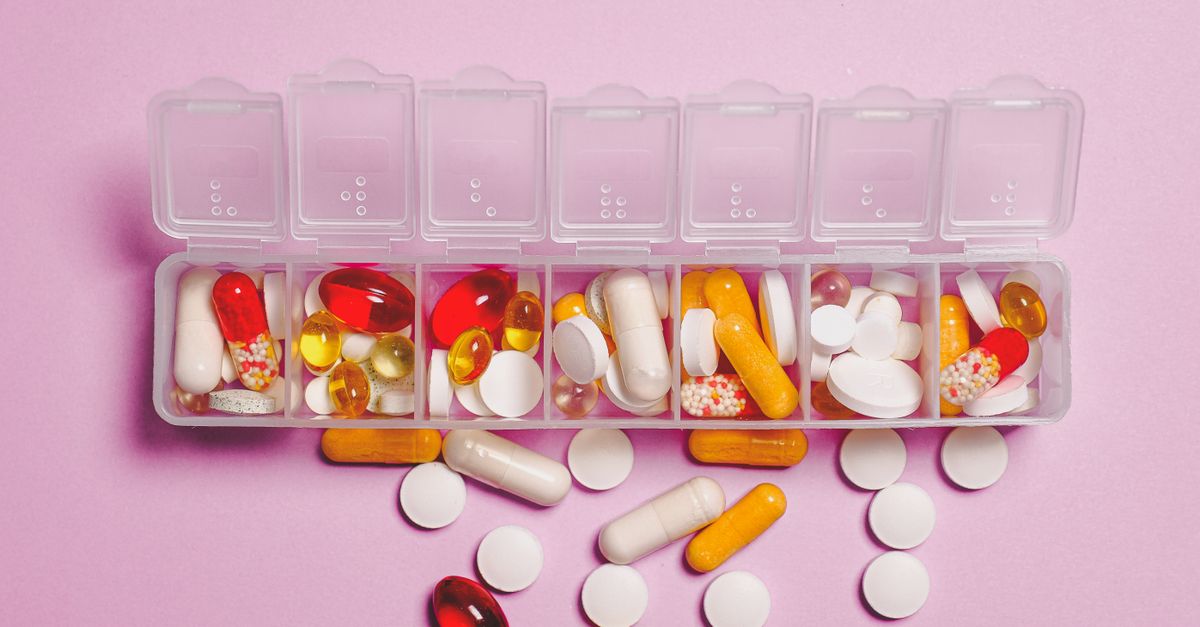
Picture a traveler who wants to stay in one city long enough to truly explore its hidden gems, rather than hopping on the next train after a brief stop. In the world of oral medicines, that traveler is the drug molecule, and the city is the stomach. Traditional delivery systems often whisk the drug away too quickly, but the emerging class of biodegradable polymers acts like a comfortable, long-term hotel, keeping the medicine right where it can work best. This case-study walks you through the market dynamics, scientific breakthroughs, and investment angles that make this story both timely and compelling (2024 edition).
Medical Disclaimer: This article is for informational purposes only and does not constitute medical advice. Always consult a qualified healthcare professional before making health decisions.
Market Landscape and Growth Drivers
The Asia-Pacific gastroretentive drug delivery market is set to surpass $1.2 billion in revenue by 2035, propelled by a strong compound annual growth rate (CAGR) highlighted in the IndexBox forecast. Rising prevalence of chronic gastrointestinal (GI) disorders such as gastro-esophageal reflux disease and peptic ulcers, combined with a clear patient preference for once-daily dosing, creates a fertile environment for advanced delivery platforms.
Healthcare reforms across China, India, Japan, and South Korea are expanding insurance coverage for innovative oral formulations, reducing out-of-pocket costs and encouraging physicians to prescribe gastroretentive products. Urbanization and aging demographics further boost demand; the proportion of people over 60 in the region is projected to rise from 12 % in 2020 to 21 % by 2035, according to United Nations data. Older adults typically experience slower gastric emptying, making prolonged gastric residence both safe and therapeutically advantageous.
Beyond demographics, the surge in digital health platforms is nudging patients toward therapies that require fewer clinic visits. A once-daily gastroretentive tablet fits neatly into this lifestyle, offering convenience while maintaining steady drug levels. Together, these forces weave a market tapestry that is both expansive and resilient.
Key Takeaways
- Projected market size of $1.2 billion by 2035.
- Growth driven by chronic GI disease burden and patient demand for once-daily dosing.
- Regulatory reforms and expanding insurance coverage accelerate adoption.
- Demographic shifts toward an older population increase clinical need.
Having set the stage, let’s examine why the old-school polymer options are stumbling blocks on the path to sustained growth.
Problem: Limitations of Traditional Non-Degradable Polymers
Conventional gastroretentive systems often rely on non-degradable polymers such as ethylcellulose, hydroxypropyl methylcellulose, and various acrylic resins. While these materials can create buoyant matrices, they raise several red flags for manufacturers and regulators alike.
First, biocompatibility concerns arise when polymer fragments linger in the GI tract for weeks or months. Clinical studies have reported mild mucosal irritation in a small subset of patients using high-dose non-degradable tablets, prompting caution from gastroenterologists. Second, the environmental impact is non-trivial; production waste and post-consumer polymer residues contribute to the growing micro-plastic burden in waterways, a point of increasing scrutiny in the Asia-Pacific region where governments are tightening waste-management legislation.
Third, manufacturing costs are inflated because non-degradable polymers often require specialized coating equipment and stringent clean-room conditions to meet purity standards. This cost pressure translates into higher retail prices, limiting market penetration in price-sensitive markets like India and Indonesia. Finally, regulatory pathways for non-degradable excipients can be lengthy. Agencies such as China’s NMPA and Japan’s PMDA request extensive toxicology data, adding months to product development timelines and discouraging smaller innovators.
In short, the old polymers are like a leaky roof on that hotel we imagined - functional for a night but costly and uncomfortable over a longer stay.
With the challenges outlined, the next logical step is to explore the greener, smarter alternatives.
Emerging Biodegradable Polymers: Types and Properties
Biodegradable polymers are engineered to break down into harmless by-products - typically water and carbon dioxide - once they have served their therapeutic purpose. Three families dominate the current gastroretentive landscape:
- Poly(lactic-co-glycolic) acid (PLGA): A copolymer of lactic and glycolic acids, PLGA degrades via hydrolysis. By adjusting the lactic-to-glycolic ratio, scientists can fine-tune degradation from a few days to several weeks, matching the release profile of drugs that require extended exposure.
- Polycaprolactone (PCL): Known for its low melting point and excellent flexibility, PCL degrades slowly, making it ideal for floating systems that must remain buoyant for 12 hours or more. Its semi-crystalline structure also imparts a natural adhesive quality to gastric mucus.
- Starch-based blends: Derived from corn, potato, or tapioca, these blends combine natural polysaccharides with synthetic carriers to achieve rapid swelling and buoyancy. Because starch is renewable, the environmental footprint is markedly lower than that of petroleum-based polymers.
All three categories exhibit tunable properties that address the shortcomings of non-degradable polymers. For instance, a recent study in the Journal of Controlled Release demonstrated that a PLGA-based gastroretentive tablet achieved a 95 % drug release over 10 hours while completely degrading within 30 days, eliminating residual polymer in the colon.
Beyond performance, these polymers echo the circular-economy ethos that many Asian governments are championing. Imagine a plastic bottle that dissolves after use - biodegradable polymers aim for the same ‘use-and-disappear’ elegance, but inside the human body.
Now that we understand the material toolbox, let’s see how innovators are turning those tools into market-ready products.
Technological Breakthroughs and Formulation Strategies
Innovation in coating and matrix design has turned biodegradable polymers from a laboratory curiosity into a commercial reality. One breakthrough is the use of pH-responsive coating layers that dissolve only when the tablet reaches the acidic environment of the stomach (pH 1-3). This ensures that the dosage form remains intact during the brief transit through the esophagus and duodenum, then expands or inflates to increase gastric residence time.
Another advancement involves dual-function polymer matrices that combine buoyancy with muco-adhesion. Researchers at a leading Japanese university reported a PCL-starch composite that floats on gastric fluids while simultaneously forming hydrogen bonds with the mucus layer, extending gastric retention beyond 12 hours in canine models.
Manufacturers are also adopting hot-melt extrusion (HME) techniques that eliminate the need for organic solvents, reducing both cost and environmental impact. HME enables the production of uniform, high-density pellets that can be filled into capsules or compressed into tablets, offering flexibility for different market segments.
These technologies collectively enable a new class of products that deliver drugs such as proton-pump inhibitors, antihistamines, and certain antibiotics with improved efficacy and patient adherence. Think of it as upgrading from a simple tent to a modular, weather-proof cabin - still portable, but far more comfortable for a long stay.
Beyond scientific triumphs, the financial picture is equally compelling.
Economic Impact: Cost Savings and Revenue Projections
Transitioning to biodegradable polymer platforms can unlock significant financial upside. The IndexBox forecast attributes an additional $1.2 billion in revenue to the Asia-Pacific market by 2035 when biodegradable systems capture even a modest 15 % share of the overall gastroretentive segment.
From a cost perspective, biodegradable polymers lower raw-material expenses by up to 20 % because they can be sourced from bulk fermentation processes (e.g., PLA from corn). Hot-melt extrusion further trims manufacturing overhead by reducing solvent recovery steps and shortening cycle times.
Higher market acceptance also drives revenue. Surveys conducted by a leading market-research firm in 2023 found that 68 % of physicians in China would prefer prescribing a biodegradable gastroretentive tablet over a traditional non-degradable counterpart, citing safety and patient comfort. This preference translates into faster formulary inclusion and larger prescription volumes.
Moreover, insurance reimbursements are beginning to reflect the long-term cost savings associated with reduced adverse events and better disease control, creating a virtuous cycle of adoption and profitability.
Overall, the combined effect of lower production costs, stronger prescriber endorsement, and expanded patient pools creates a compelling return on investment for companies that invest early in biodegradable technologies.
Regulators are catching up, and their evolving stance is reshaping the risk landscape.
Regulatory and Environmental Considerations
Regulators across the Asia-Pacific are progressively aligning their guidelines with sustainability goals. In 2022, China’s NMPA released a draft amendment that classifies fully biodegradable excipients as “generally recognized as safe” (GRAS), shortening the data package required for new drug applications. India’s CDSCO follows a similar trajectory, offering fast-track review for products that demonstrate a reduced environmental burden.
Japan’s PMDA has introduced incentive programs that provide tax credits for manufacturers that incorporate renewable polymers into their formulations. South Korea’s MFDS, meanwhile, mandates post-marketing environmental monitoring for any oral dosage form that leaves polymer residues in wastewater, effectively penalizing non-degradable products.
These regulatory shifts are not merely bureaucratic; they directly affect market entry risk. Companies that adopt biodegradable polymers can expect fewer roadblocks, lower compliance costs, and, in some jurisdictions, direct financial incentives. Moreover, the environmental narrative resonates with consumers, enhancing brand reputation and market share.
In practice, this means a smoother pathway from bench-top to bedside - much like receiving a fast-track passport when you meet all the green-visa criteria.
For investors watching these trends, a clear action plan emerges.
Strategic Recommendations for Investors
Investors looking to capture growth in the gastroretentive space should prioritize three strategic actions:
- Partner with polymer innovators. Early-stage firms in Taiwan and Singapore are developing next-generation PLGA and starch blends with patented degradation kinetics. Joint ventures or licensing deals can secure exclusive rights to these assets before they become mainstream.
- Map the intellectual-property (IP) landscape. While many biodegradable polymers are covered by broad patents, there remain gaps in specific formulation methods, such as pH-responsive coatings. Conducting a freedom-to-operate analysis can uncover low-risk opportunities for differentiation.
- Design region-specific go-to-market plans. In China, leveraging local contract manufacturing organizations (CMOs) that already comply with NMPA’s GRAS pathway can accelerate launch timelines. In India, focusing on cost-sensitive generic formulations that meet CDSCO’s fast-track criteria can capture volume.
By aligning capital allocation with these tactics, investors can mitigate risk while positioning themselves at the forefront of a market projected to generate billions in revenue over the next decade. Think of it as planting a seed in fertile soil - choose the right variety, tend it wisely, and reap a bountiful harvest.
Common Mistakes
- Assuming all biodegradable polymers behave the same - degradation rates vary widely.
- Overlooking local regulatory nuances - what qualifies as GRAS in China may not in Japan.
- Neglecting supply-chain resilience - fermentation-based polymers can be subject to agricultural price volatility.
"The Asia-Pacific gastroretentive market is on track to exceed $1.2 billion by 2035, with biodegradable platforms accounting for a substantial share of that growth," - IndexBox 2023 forecast.
Glossary
- Biodegradable polymer: A material that breaks down into natural substances through biological processes.
- Gastroretentive drug delivery: A system designed to remain in the stomach for an extended period to improve drug absorption.
- Compound annual growth rate (CAGR): The year-over-year growth rate of an investment over a specified period.
- Muco-adhesion: The ability of a material to stick to mucosal surfaces, such as the stomach lining.
- Hot-melt extrusion (HME): A manufacturing process that shapes polymers by heating and pushing them through a die.
Frequently Asked Questions
What advantages do biodegradable polymers offer over traditional polymers in gastroretentive products?
Biodegradable polymers eliminate long-term residue in the GI tract, reduce environmental waste, lower manufacturing costs, and often enjoy faster regulatory pathways, all of which enhance market acceptance.
Which biodegradable polymer is most commonly used for 12-hour floating tablets?
Polycaprolactone (PCL) is favored for long-duration floating systems because of its low density and slow degradation profile, enabling retention times beyond 12 hours.
How do regulatory agencies in the Asia-Pacific region view biodegradable excipients?
Many agencies, such as China’s NMPA and Japan’s PMDA, are creating streamlined pathways and incentives for biodegradable excipients, recognizing their safety and environmental benefits.
What are the key cost drivers when switching to biodegradable polymers?


